
What are the natural color options for Freshwater Edison pearls?
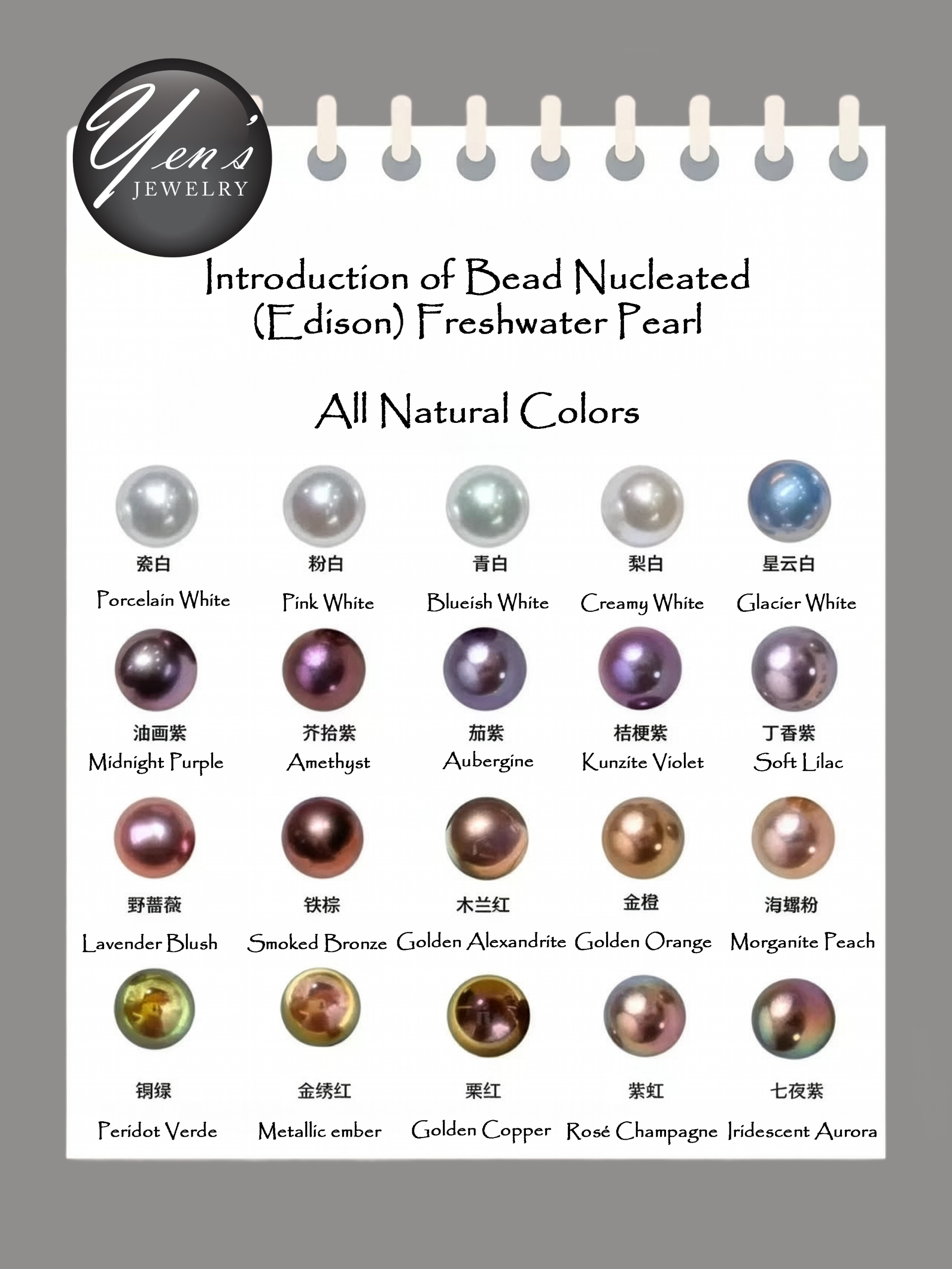
How to Care for Pearls
Pearls are softer and more delicate than most gemstones, so simple care practices can greatly extend their beauty and lifespan.
1. Wipe Pearls After Wearing
After wearing pearls, gently wipe them with a soft cloth. This removes body oils, sweat, and residue that can accumulate on the surface. Even perspiration can be slightly acidic and may affect the pearl’s luster over time.
2. Avoid Direct Contact With Chemicals
Pearls should not come into direct contact with perfume, hairspray, cosmetics, lotions, or household cleaners. These substances can slowly damage the nacre and dull the surface. It is best to apply makeup and fragrance first, then put on pearls afterward.
A common rule in the jewelry industry is:
“Last on, first off.”
3. Keep Pearls Away From Water and Harsh Conditions
Avoid wearing pearls while swimming, showering, or exercising. Chlorine, chemicals, and prolonged moisture can damage the nacre or weaken the thread used in pearl strands.
4. Store Pearls Properly
Pearls should be stored separately in a soft pouch or fabric-lined jewelry box so they do not rub against harder gemstones or metal jewelry that could scratch them. Avoid airtight plastic bags or extremely dry environments, which can harm pearls over time.
5. Clean Gently When Needed
If pearls become dirty, wipe them with a slightly damp microfiber cloth. For deeper cleaning, seek professional advice during the restringing process. Never use ultrasonic cleaners and gem solutions.
6. Check the Stringing
For pearl necklaces worn frequently, professional restringing every 1–2 years helps prevent breakage and protects the pearls from rubbing against each other.