
Rare Collectibles · March 2026 · Prepared for JCK 2026
Big Edison pearls are easy to find. Big Edison pearls that are perfectly round, mirror-bright and deeply colored, matched into full strands, are not. For JCK Las Vegas 2026 we put together a small group of them in two colors we call Tanzanite Blue and Amethyst Purple: strands of 13 to 15 mm, and one Tanzanite Blue strand that runs from 15.7 to 17.9 mm.
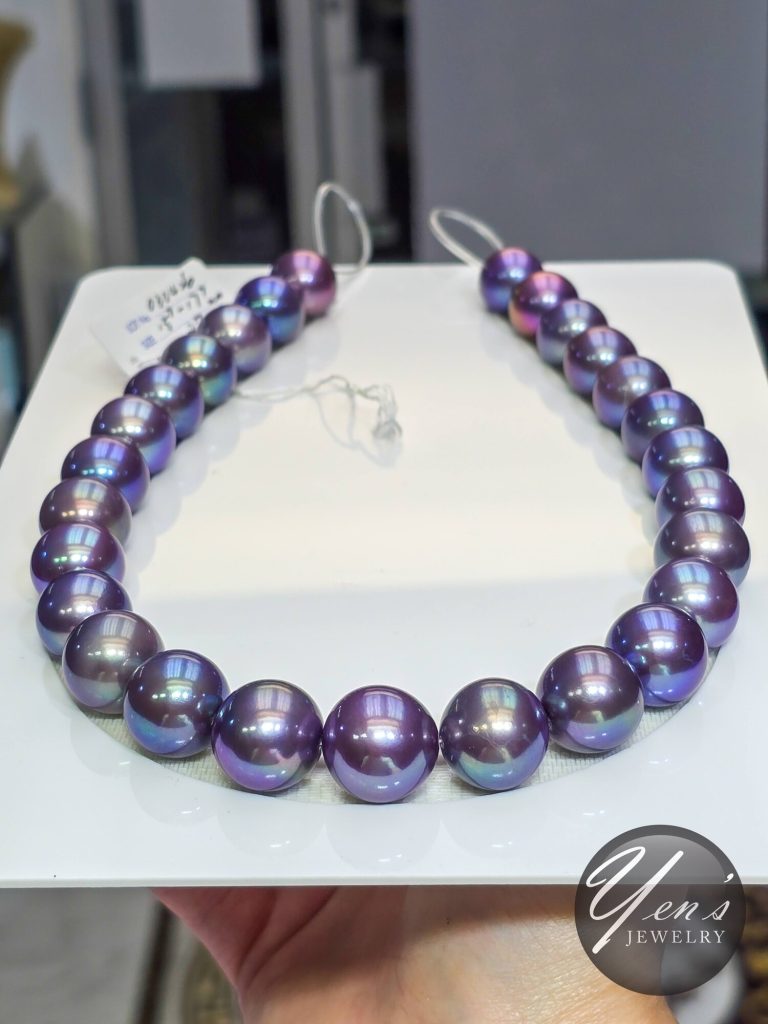
Edison pearls, Tanzanite & Amethyst
The collection at a glance
- Pearl
- Freshwater, cultured, bead-nucleated (Edison)
- Colors
- Tanzanite Blue, Amethyst PurpleOur names for these color groups
- Strands
- 13–15 mm
- Feature
- Tanzanite Blue, 15.7–17.9 mmMost Edison pearls run 6–12 mm
- Shape
- Round
- Luster
- High, metallic
- Debut
- JCK Las Vegas 2026
Four kinds of rare, all at once
Edison pearls are grown in Chinese freshwater mussels around an inserted bead, the method that finally let freshwater pearls grow large and round. (Our Edison pearl guide covers how.) Plenty of large Edisons come out of the water every year. What is rare is a pearl that gets four things right at the same time, and a strand where every pearl does.
1. Size
Most Edison pearls measure 6 to 12 mm. Getting to 13 mm and beyond means a larger bead and more years in the water: the finest Edisons grow for three to four years. Every extra season is another chance for the mussel to reject the bead, for the pearl to go off-shape, or for the surface to pick up spots. Past 15 mm, very few pearls survive the trip intact. Our feature strand reaches 17.9 mm at its center.
2. Perfectly round
The bead starts round, but the nacre the mussel lays over it doesn’t always follow. The longer a pearl grows, the more likely it is to drift into a drop, a button or a baroque, or to develop the rings (circles) that are common on large freshwater pearls. Truly round pearls are a small share of any large harvest, and matching a full strand of them takes sorting through far more pearls than end up on it.
3. High luster
Luster comes from tight, even layers of nacre that reflect light like a mirror. On large freshwater pearls it is often the first thing to go: chalky or soft luster is common, and shortcuts like heat treatment can make it worse. These pearls show the sharp, metallic luster that only well-grown pearls have, with reflections you can read across the surface.
4. Color
Whites and soft pastels make up most of the Edison harvest. Deep, saturated purples are far scarcer, and they depend on careful mussel breeding: farms now raise lines with deep purple inner shells as tissue donors, which we saw first-hand on our 2025 trip to Shanxiahu. On top of that, the color has to hold even and consistent from pearl to pearl, so the strand reads as one color from clasp to center.
- 17.9 mmThe center pearl of our feature Tanzanite Blue strand. Most Edisons stop at 12 mm.
- RoundMatched for roundness end to end, at sizes where most pearls go off-shape.
- MetallicMirror-bright luster with saturated blue-violet and purple color.
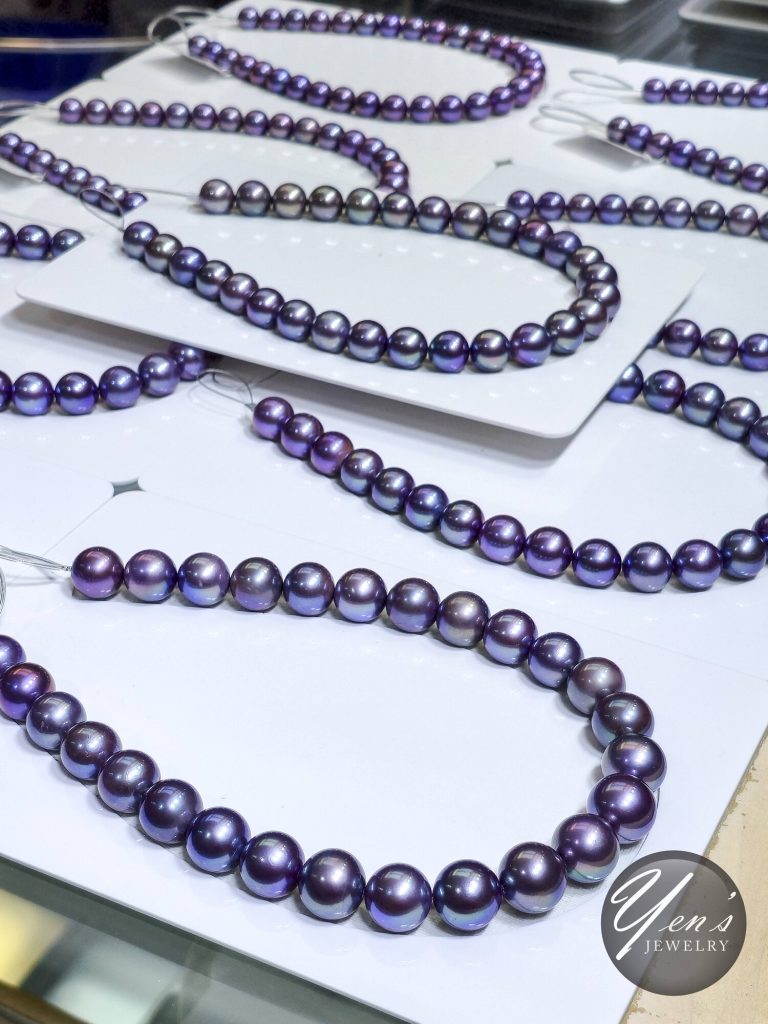
Any one of size, roundness, luster or color narrows the pool. All four, matched across a full strand, is where Edison pearls become collectible.
Tanzanite Blue
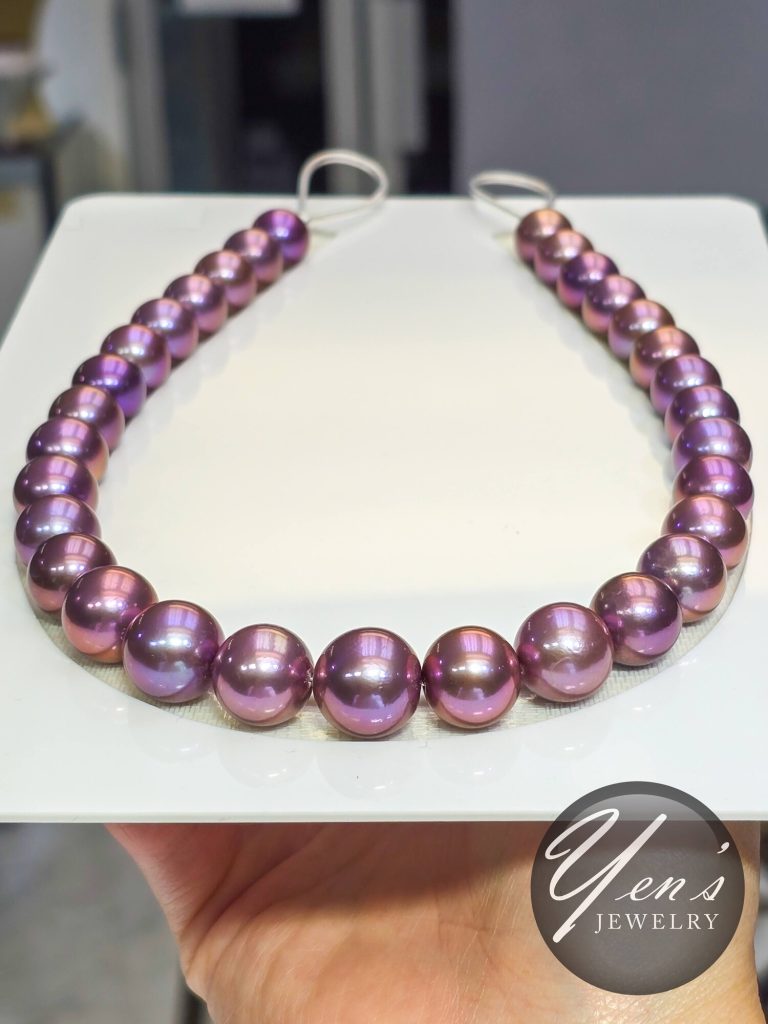
We named this group for tanzanite, the gem that shifts between blue and violet as it turns. These pearls do the same: a deep violet body with blue and steel-blue flashes moving across the surface as the light changes. It is the rarer of the two colors, and the color of our largest strand.
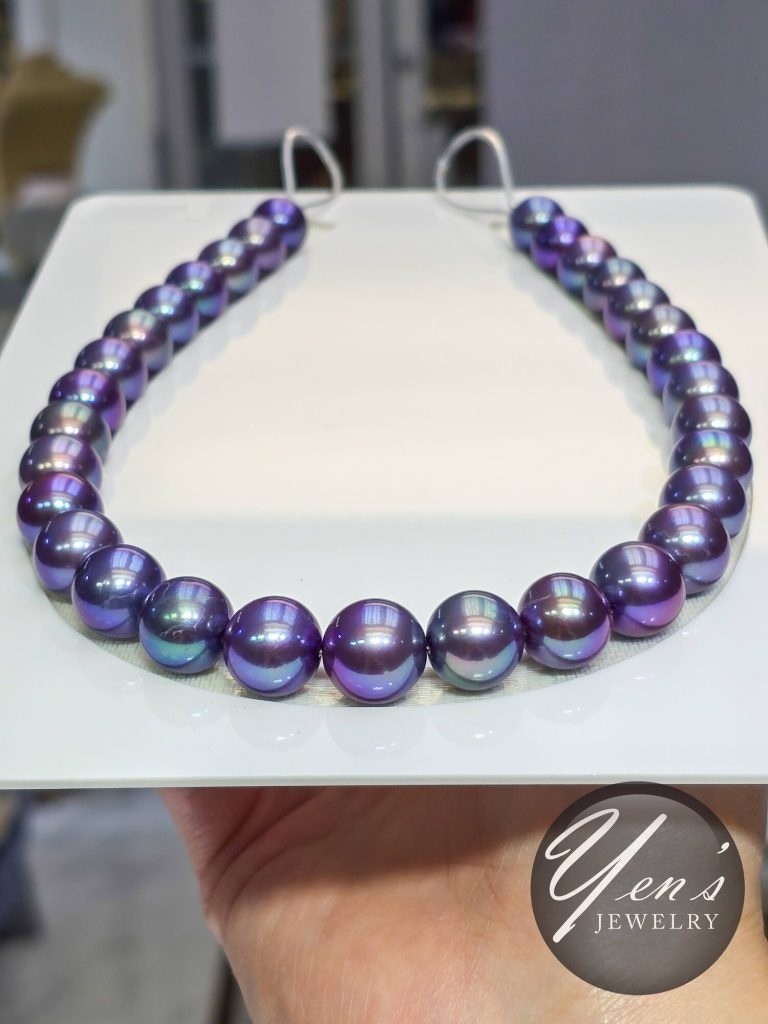
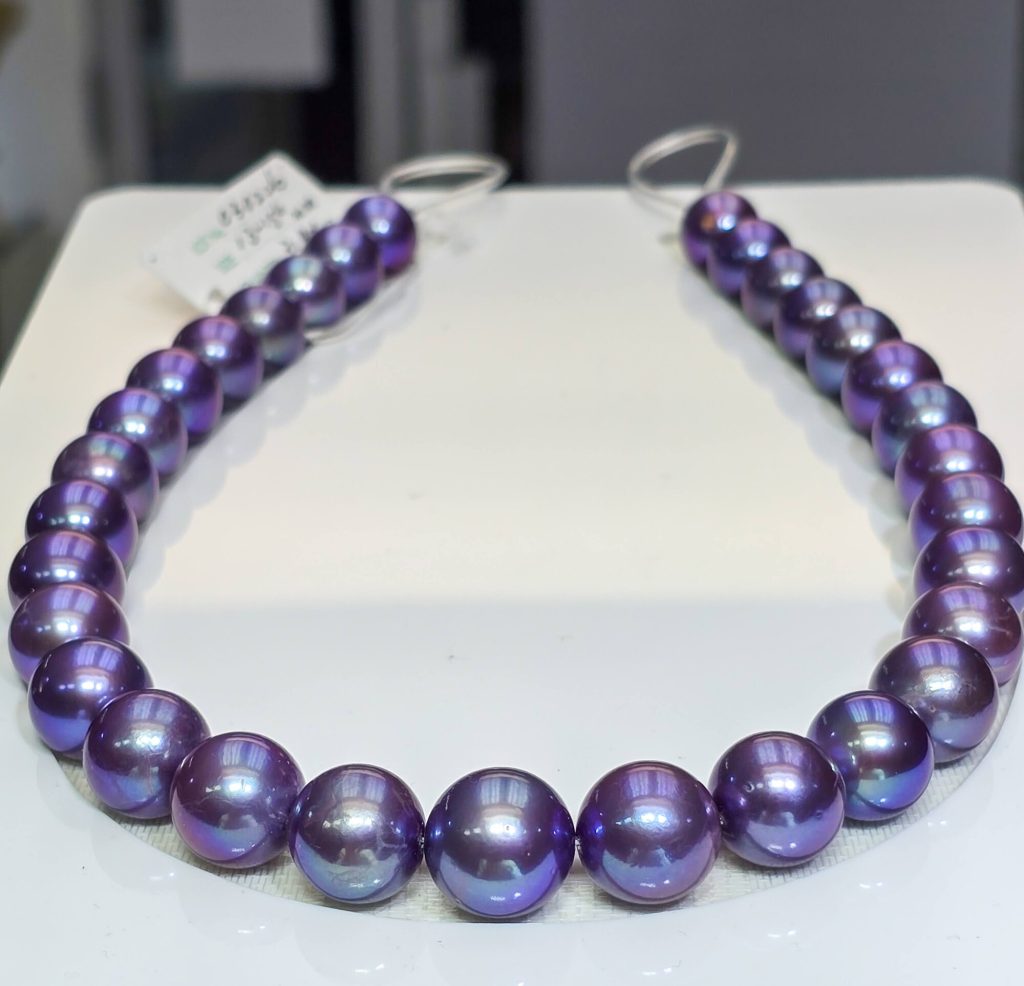
The feature strand: 15.7 to 17.9 mm
Every rarity above gets harder with size, and this strand sits at the far end. Its pearls graduate from 15.7 mm at the clasp to 17.9 mm at the center, the size of large South Sea pearls, yet they are freshwater Edisons: round, mirror-bright and in full Tanzanite Blue. At these sizes a single matching pearl can take a long time to find. A full strand is the kind of piece we may not be able to assemble again.
Amethyst Purple
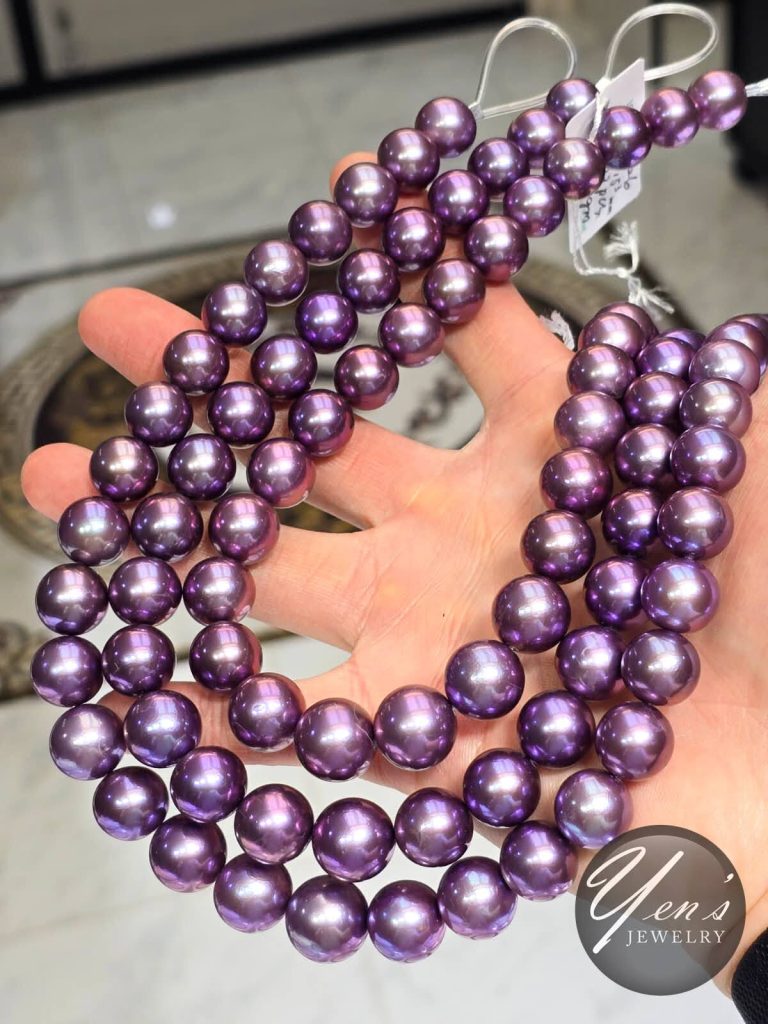
The Amethyst group runs warmer: a rich purple with rose and pink highlights, closer to fine amethyst than to tanzanite. In the hand, at 13 to 15 mm, the strands have real weight, and the luster keeps the color bright rather than heavy.
Prepared for JCK 2026
We have exhibited at JCK Las Vegas for more than 25 years, and we build a few pieces for each show that buyers won’t see anywhere else. This group was matched in our office in early March 2026 for the show. After JCK, the strands that remain are available to approved trade accounts by appointment.
Frequently asked questions
Most Edison pearls measure 6 to 12 mm, and 13 to 16 mm strands are on the market. Above 15 mm, pearls that are also round, lustrous and well colored are scarce. Our feature Tanzanite Blue strand runs from 15.7 to 17.9 mm.
Larger pearls need a bigger bead and more years in the mussel. Each extra season raises the chance of rejection, off-round shapes, rings and surface spots, so only a small share of large pearls come out perfectly round with high luster.
They are our names for two color groups of round Edison freshwater pearls: Tanzanite Blue, a deep violet body with blue and steel-blue flashes, and Amethyst Purple, a rich purple with rose highlights. They describe color, not a lab grade.
Not the way PSL grades Akoya. Edison pearls are judged by eye on size, shape, luster, surface and color. As with any colored freshwater pearl, ask your supplier about color origin.
Learn more: Edison pearls: the modern way to grow freshwater pearls · Freshwater pearl guide · Inside Shanxiahu