Rare Collectibles · May 2024
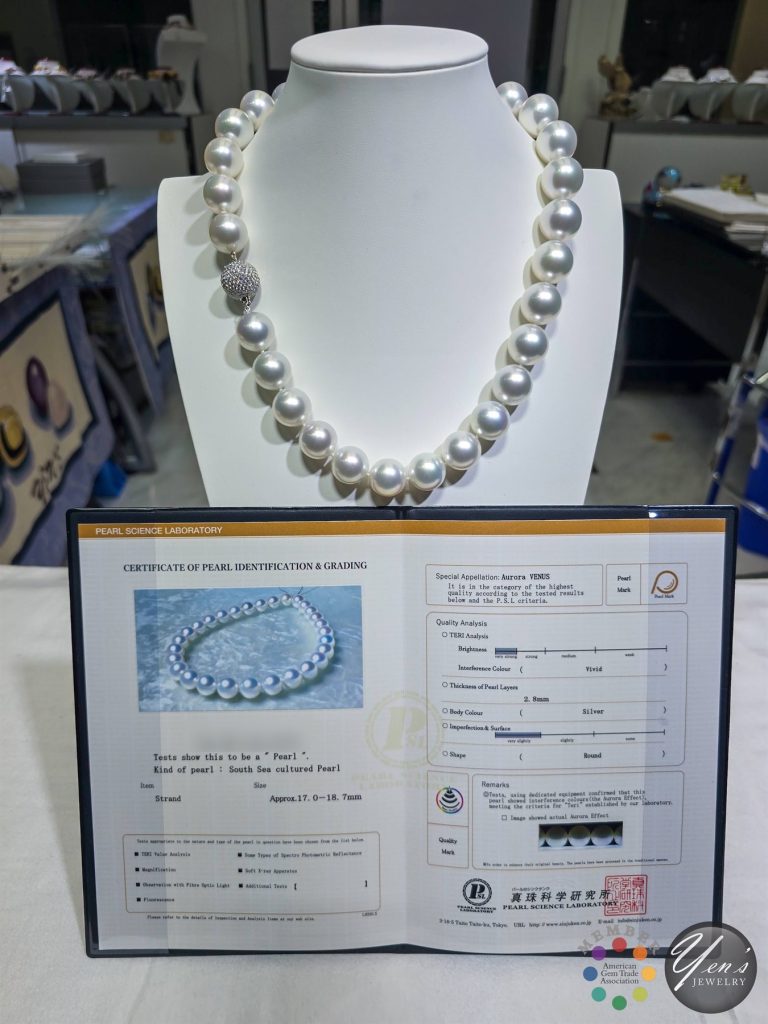
A client brought us a request most dealers would turn down. Take a finished, certified strand of 25 Australian South Sea pearls, 16 inches long, and make it longer: four more pearls, matched to the rest, with a new Pearl Science Laboratory (PSL) report covering all 29, issued in English. We had one week.
Aurora Venus® South Sea
From the PSL report
- Pearl
- Australian South Sea, cultured
- Size
- Approx. 17.0–18.7 mmMost South Sea strands: 10–15 mm
- Pearls
- 29Originally 25, 16 inches
- Designation
- Aurora Venus® (オーロラヴィーナス)
- Brightness
- Very strong
- Interference
- Vivid
- Body color
- Silver
- Surface
- Very slight
- Shape
- Round
- Nacre
- 2.8 mmAurora Venus requires 1.0 mm
- Clasp
- Pavé diamond ball, 5.9 ct
- Report
- PSL SS-type, in EnglishEnglish PSL reports are rarely issued. Number withheld for the owner’s privacy.
Adding to a finished strand
Making a strand longer sounds simple: add pearls, restring, done. With a certified strand at this size, it is anything but.
The new pearls have to disappear into the strand. Every pearl in a fine South Sea necklace is matched to its neighbors in size, roundness, body color, overtone and luster. The four new pearls had to fit the graduation of a 17 to 18.7 mm strand and carry the same silver body and vivid overtone, so that no one could tell where the original strand ends and the new pearls begin. At this size, even a few candidates are hard to find. Four that match each other and the strand are harder still.
The report has to cover all of them. A PSL report describes one strand exactly as it was tested. Change the strand and the old report no longer applies; PSL’s own terms void a report once the item has changed. So the finished 29-pearl strand went back to PSL to be tested again, and a new Aurora Venus® designation depended on every pearl, old and new, meeting the grade together.
The report had to be in English. PSL writes its reports in Japanese as a rule, and an English-language PSL report is rarely seen, even in the trade. The client needed one, so we asked PSL to issue the new report in English on the same tight schedule.
And it all had to happen in one week. Matching, restringing, recertification and an English report would usually take far longer. The client’s date didn’t move, so neither could we.
- 25 → 29Pearls in the strand after we matched and added four.
- 2.8 mmNacre thickness on the new PSL report: nearly three times the Aurora Venus® minimum.
- 1 weekFrom the client’s request to a recertified strand, with its report in English.
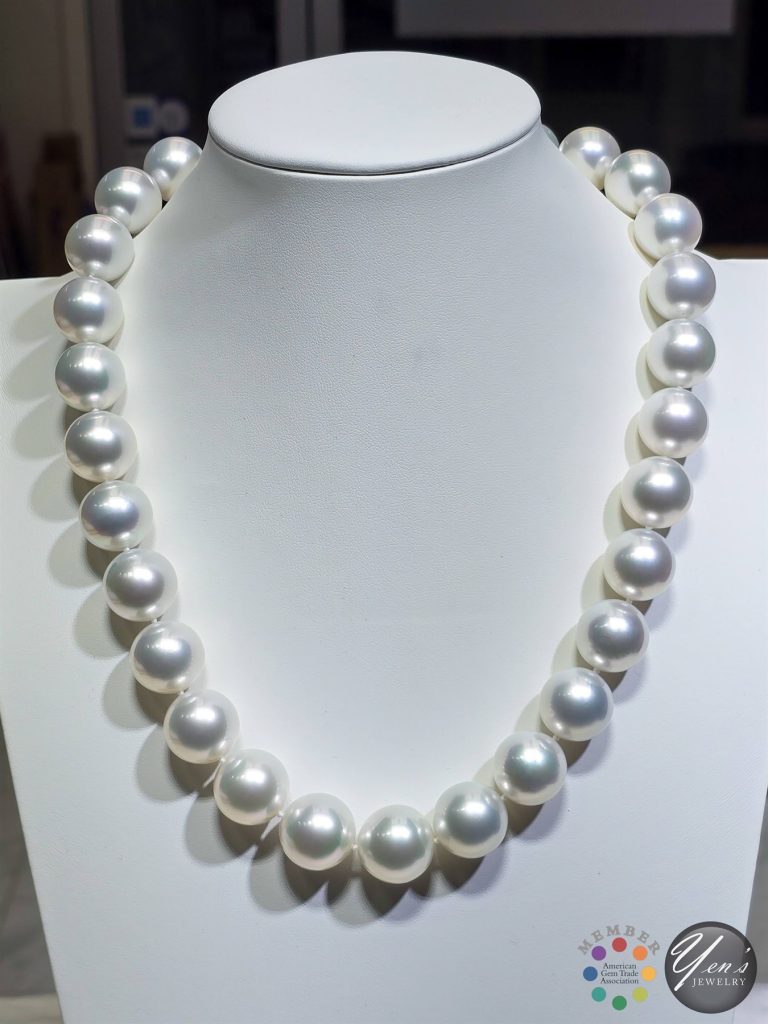
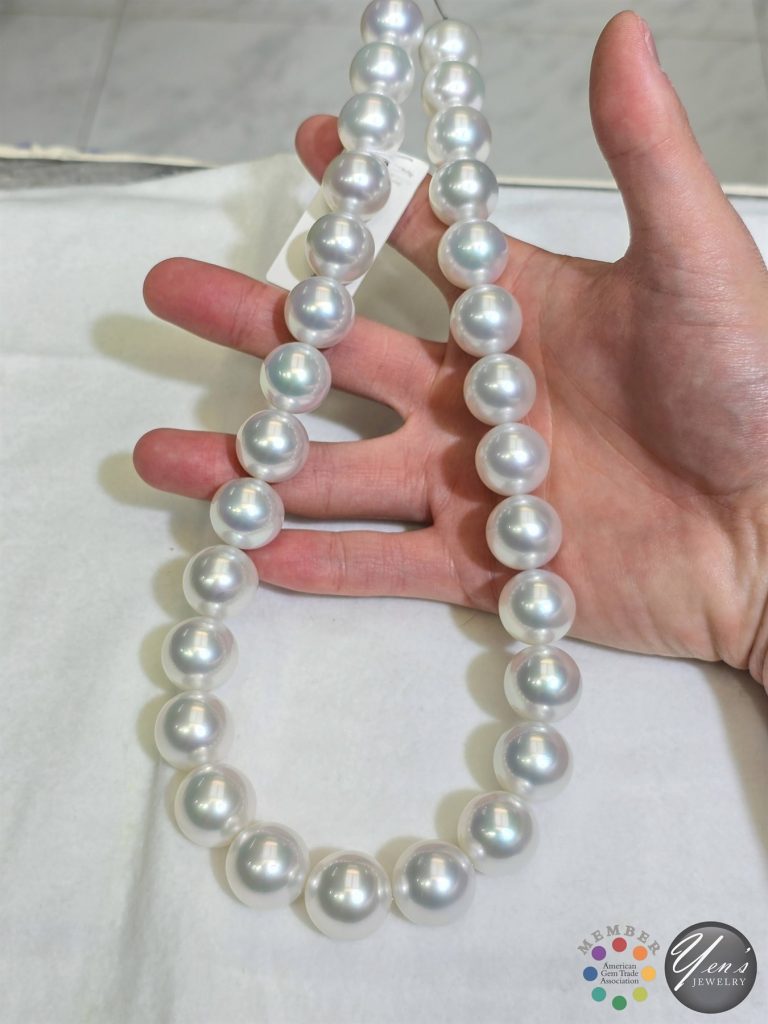
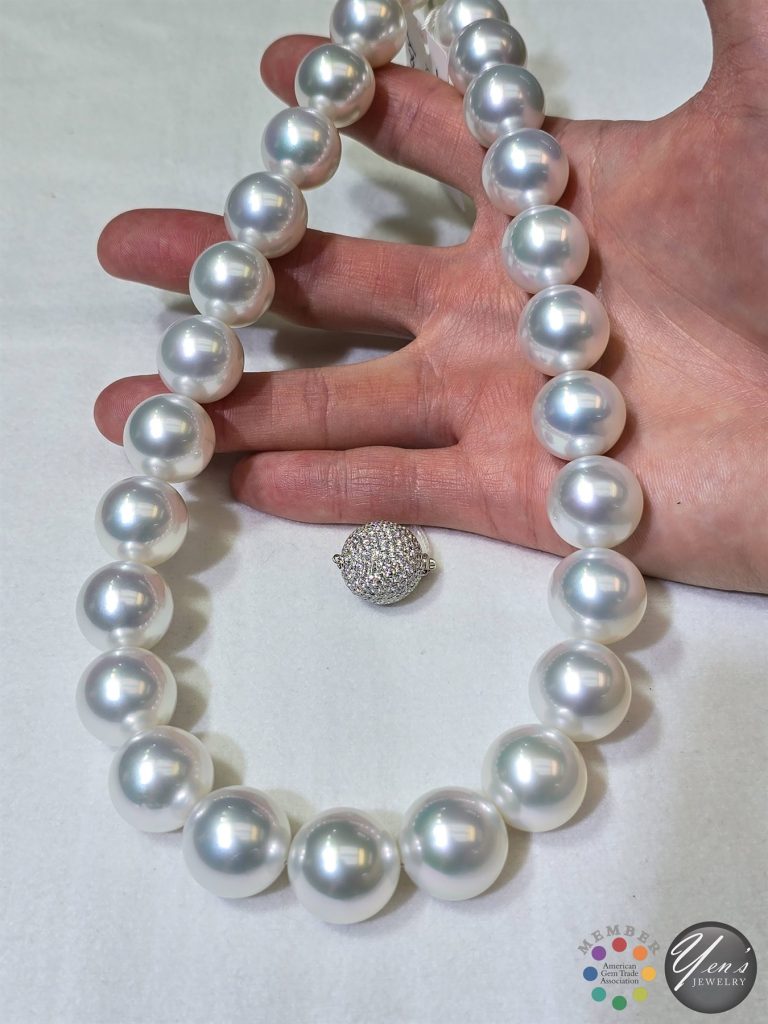
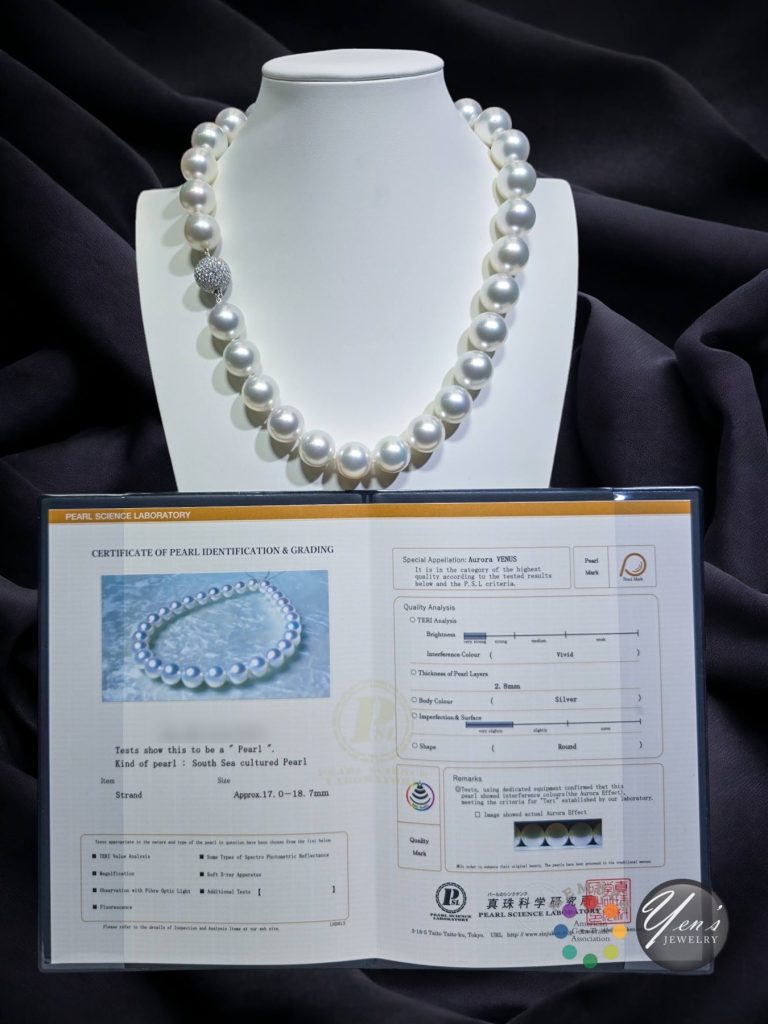
The result is the strand you see here: 29 pearls from 17.0 to 18.7 mm, graded Aurora Venus® on its new PSL report and finished with a 5.9 ct pavé diamond ball clasp.
Venus is PSL’s name for the finest silver South Sea pearls: a soft glow like marble, with a faint play of color.
See it move
Luster is easier to see than to photograph. It lives in motion: the light rolling across each pearl and the soft color that shifts at the edges as the strand turns. We filmed it in our office under ordinary light, with no filters.
VideoUnedited clips of the strand, trimmed and cropped, May 2024. Tap any clip to play.
Reading the new report
The strand’s new report is PSL’s SS type, the format for its Highest Quality series, and unusually, it is written in English. Here is what it says, in plain terms.
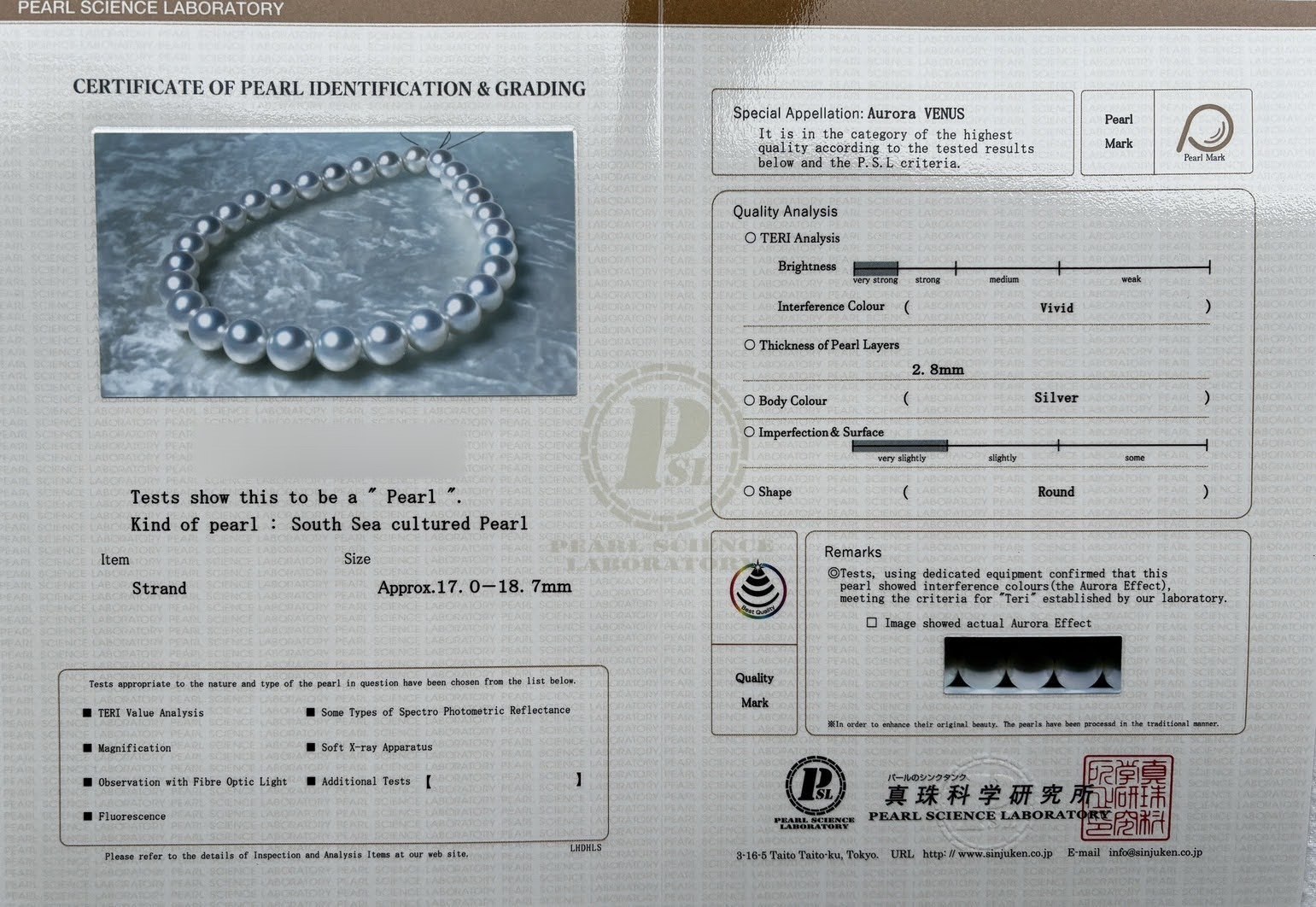
| On the report | Reads | What it means |
|---|---|---|
| Special appellation | Aurora VENUS | Aurora Venus®, PSL’s Highest Quality name for silver South Sea pearls |
| Kind of pearl | South Sea cultured pearl | Grown in the large South Sea pearl oyster |
| Size | Approx. 17.0–18.7 mm | Roughly 17 to 18.7 mm across the strand |
| Brightness | Very strong | The top step on PSL’s luster scale |
| Interference colour | Vivid | Strong, clear overtone colors |
| Thickness of pearl layers | 2.8 mm | The nacre over the bead; Aurora Venus requires 1.0 mm or more |
| Body colour | Silver | Silver-white |
| Imperfection & surface | Very slightly | PSL’s cleanest surface rating |
| Shape | Round | Round |
| Marks | Pearl Mark, Best Quality | Passed PSL’s defect inspection, and all five quality components meet PSL’s top standard |
The report also carries a photograph of the strand’s Aurora Effect, the interference colors PSL records on the lower half of the pearls. The pattern is unique to these pearls, so it works like a fingerprint that ties this strand, all 29 pearls, to this report.
The clasp
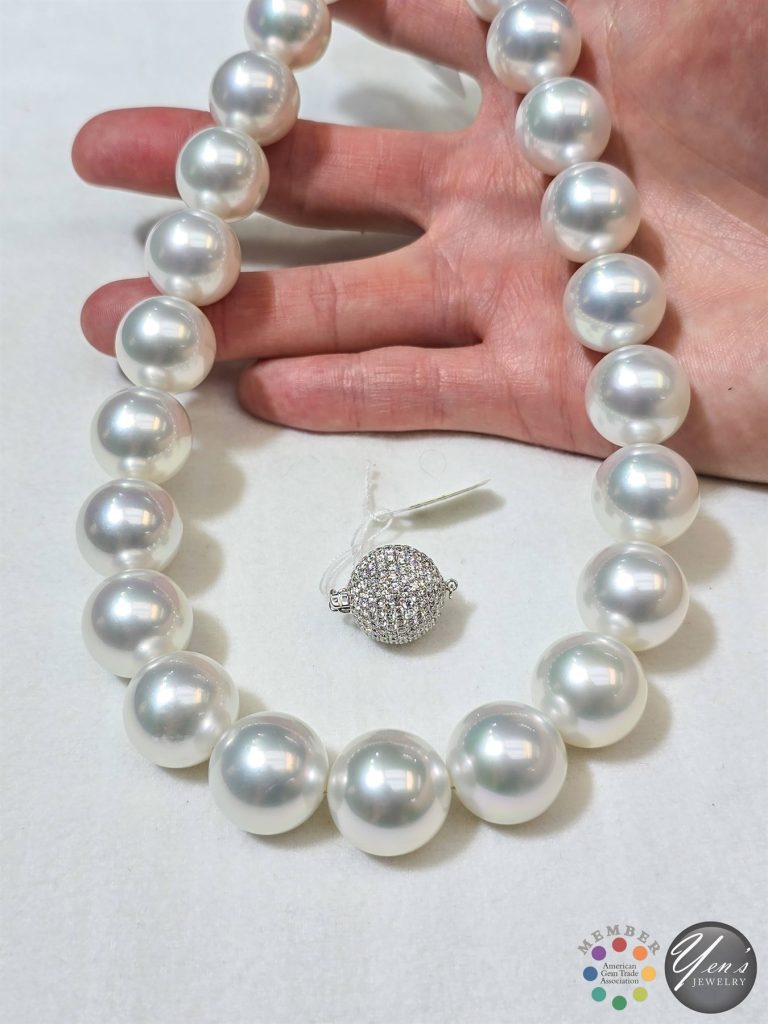
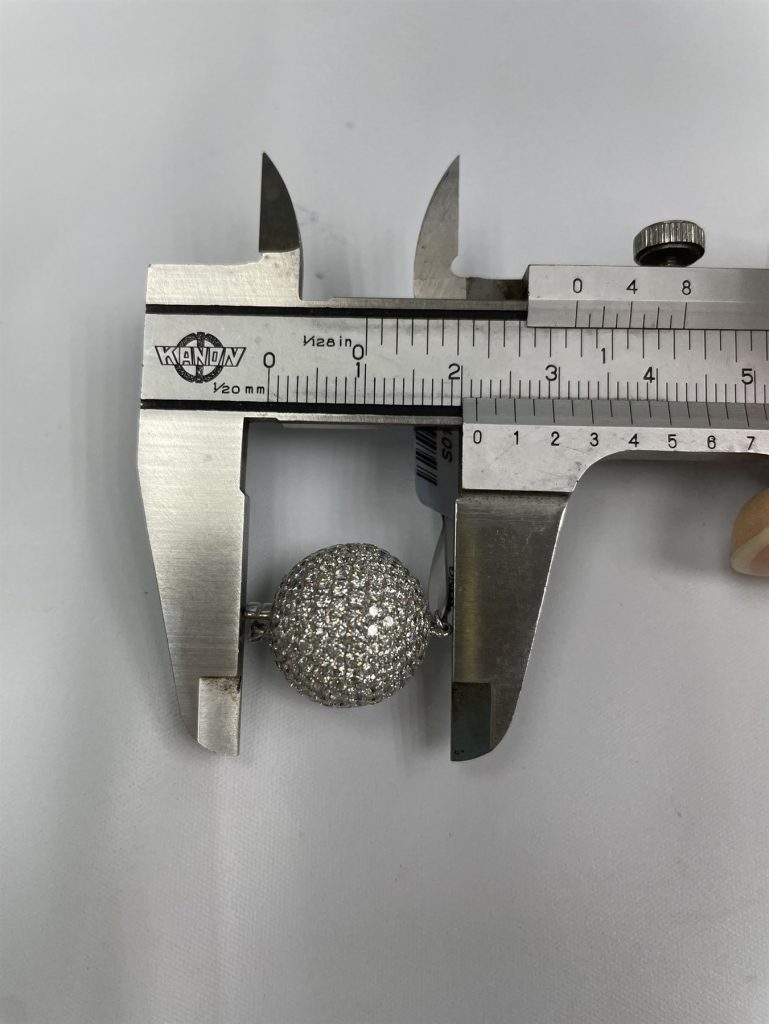
Pearls this size need a clasp that can hold its own. This strand closes with a pavé diamond ball set with 5.9 carats of diamonds, sized to sit in line with the largest pearls.
Why we call it a collectible
Pearls of 17 mm and up are a small slice of any South Sea harvest. A matched strand of them at Aurora Venus® grade is rarer again. Finding four more to match a strand that already exists, and getting the whole strand recertified with a rarely issued English report in a week, is the kind of request we may only see once.
That is why it belongs in Rare Collectibles: one of a kind, documented, and worth writing down while it passes through our hands.
Frequently asked questions
Yes, but the original report no longer applies once the strand changes. The finished strand has to go back to the lab to be tested again, and a new report is issued for the strand as it is now.
Aurora Venus® is Pearl Science Laboratory’s Highest Quality designation for silver South Sea pearls. It requires a round shape, nacre of at least 1.0 mm, PSL’s cleanest surface rating and luster that meets PSL’s standard.
PSL writes its reports in Japanese as a rule, and English-language reports are rarely seen. For this strand we requested an English report from PSL, delivered within the same one-week turnaround.
Most South Sea pearl strands measure between 10 and 15 mm. Matched strands of 17 mm and larger are rare, and very few of those reach PSL’s Aurora Venus® grade.
A PSL report number identifies one specific strand. We blur it in public photos to protect the owner. Approved trade buyers can see a full report on request.
Also in Rare Collectibles: The Tennyo That Shouldn’t Exist · Hanadama at 11–12 mm · Tanzanite Blue & Amethyst Edison pearls.
Learn more: Pearl Education